The coronavirus pandemic has created challenges for beekeepers and their communities.
We are making changes to our business to provide additional support for local honey customers and beekeepers during this time.
Effective immediately, the following changes will be implemented:
Queens
Due to overseas shipping delays, foreign queens may be in short supply in Alberta this year.
As Canada’s largest contributor to honey production, it is crucial that Alberta has access to queens. We are currently working towards:
- Increasing production of our locally mated queens. They will be available starting in June. Customers on our waiting list will be notified first about additional availability. We will then update our website stock numbers and send out an email to those who have subscribed to our mailing list.
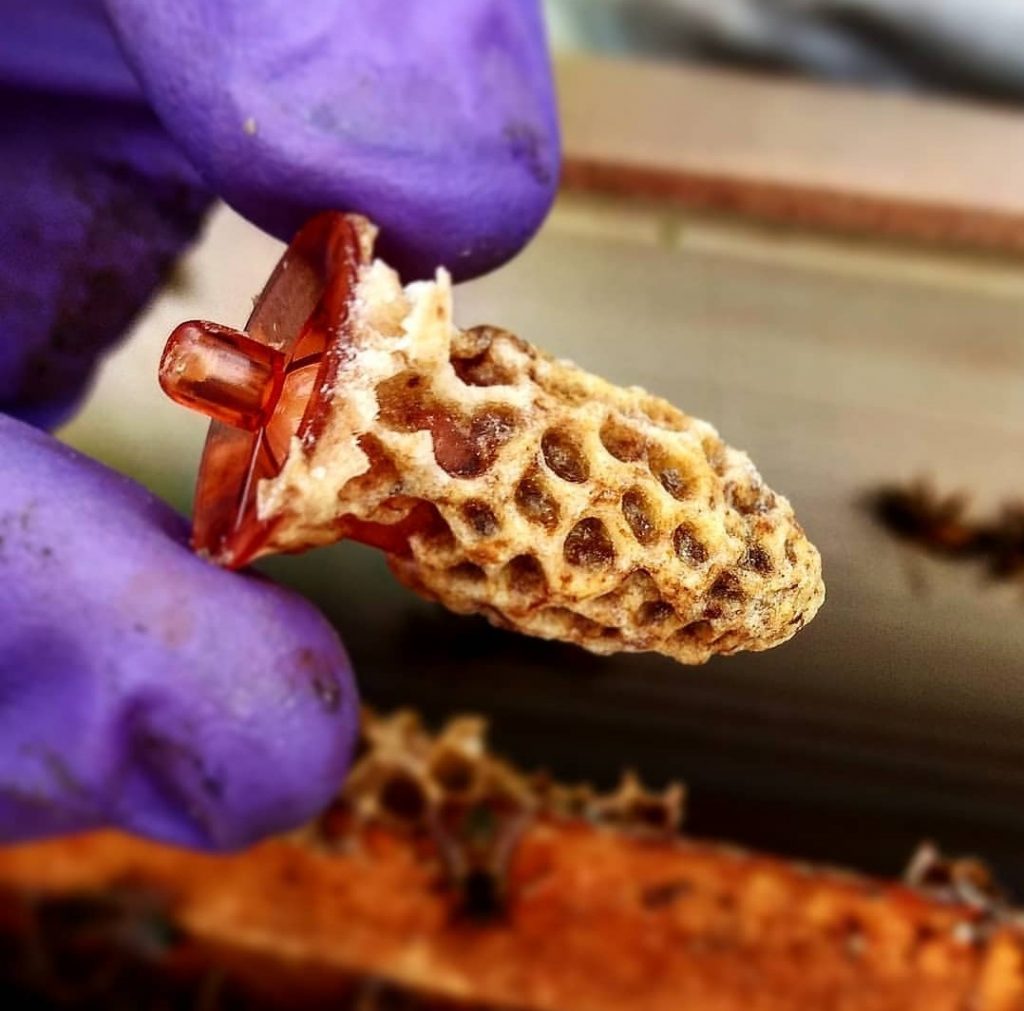
- Producing queen cells. If we are unable to keep up with demand for mated queens we will produce queen cells (time permitting). This will allow us to provide more queens to Alberta in a shorter period of time. However, there are risks associated with purchasing queen cells and it is important that beekeepers are aware of how to care for and install cells. Information will be sent out to customers via our mailing list and social media posts.
We will not, under any circumstances, increase the price of our queens in 2020. However, shipping prices may be updated to reflect price changes at local courier carriers.
Please note that we typically ship our queens via Canada post but we will be monitoring COVID-related service changes at major postal companies and will change our service provider accordingly. Customers will be contacted regarding any changes.
Free Educational Sessions
Beekeeping in 2020 will require creativity and patience.
Many new beekeepers will struggle to adequately care for their hives, especially if they had previously relied on club meetings for education.
To bridge the knowledge gap, we will be hosting educational Zoom meetings throughout the season. These sessions are free but spots are limited. Both group and private meetings are available.
Please sign up for our mailing list or keep an eye on our education page to find out what sessions are available.
Alberta Beekeepers Online Chat Group
We have created an online chat group to connect local beekeepers during this time. Members can post classifieds ads, news, tips, and more. It’s free to sign up and anyone is welcome to join. To sign up please email us with a request to join and indicate which email address you would like to use to sign up. Alternatively, click here to access the sign-up page.
Merchandise
Merchandise availability will not change. Please be patient as shipping delays are expected.
Items that are normally printed in North America may be printed elsewhere to expedite fulfilment, so customs charges may now apply to items shipped to the USA and Canada.

Honey
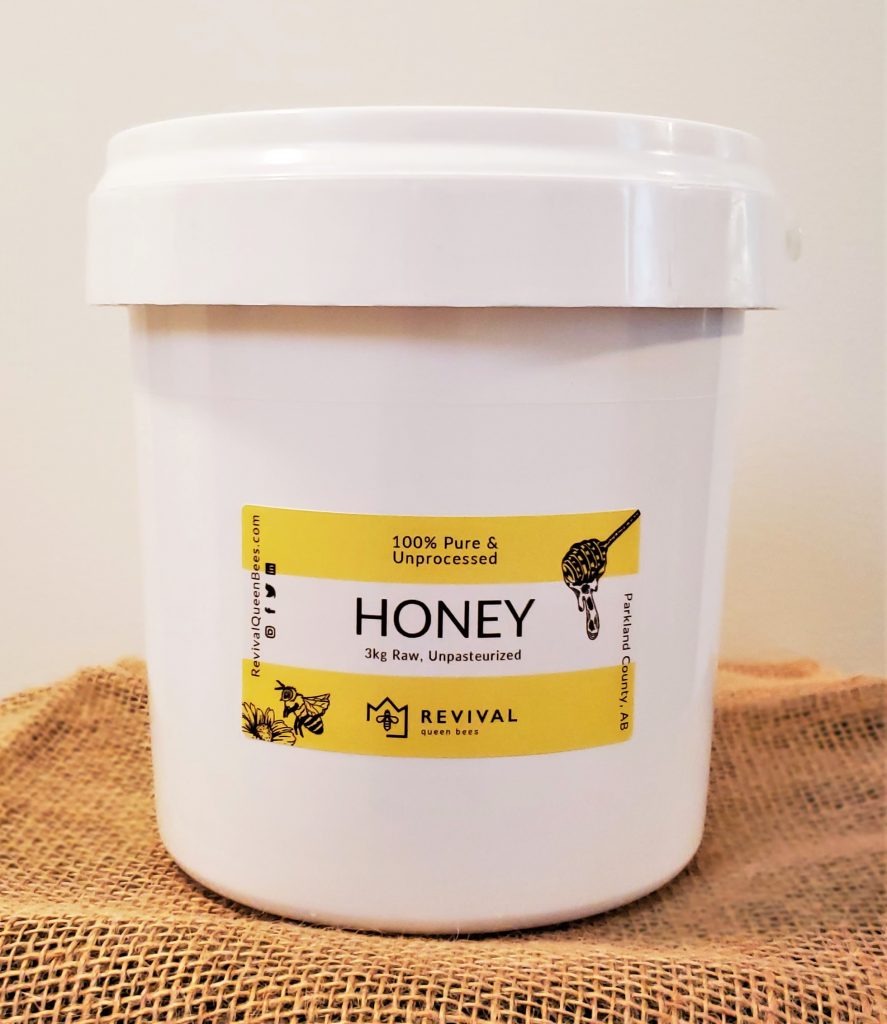
We are periodically offering free contactless delivery within Edmonton.
Honey from our 2019 harvest will not increase in price, and there will be no minimum order requirements to qualify for the free delivery option.
Deliveries will be via porch/doorstep drop-off and customers will receive a text message or email 10 minutes prior to the delivery.
Please sign up for our mailing list to get updates on our delivery service.
We thank you for continued support and patience during these trying times.
It has been amazing to watch the community pull together to help each other. If you have suggestions for additional services or support we can offer please feel free to contact us.
Buying a new queen and having her rejected by her new colony is heart breaking. By following the advice in this article you can increase the likelihood that the queen will be accepted.
Before introducing your new queen it is important to ensure that the old queen has been removed from the hive for at least 48 hours in small colonies or 72 hours in large colonies. Remove any queen cells that are present.
If you purchased your queen from Revival she will be in a JZ BZ queen cage with 4 bee attendants. The cage has a long tube that is filled with candy. The candy provides food to the bees during shipment but it also acts as a time-release barrier that the outside bees must chew through to gain access to the queen. This time release is crucial because it allows the bees in the new colony to adjust to the pheromones of the new queen.

Place the cage in the middle of the brood nest, preferably between 2 frames of emerging brood. If there is no brood in your hive place the cage in the middle of the bee cluster. Position the cage between two frames, with the candy end pointing straight up. Squish the cage firmly into wax. Do not worry about damaging the comb because the bees will quickly repair it once you remove the cage.
Over the next few days the bees will likely chew their way through the candy and the queen will be released into the hive. Occasionally, the candy is too tough to chew through so you can check on your queen after 5 days to ensure she has been released.
If the queen has not been released you can release her, but only if your bees are not clinging tightly to the outside of the cage. This clinging behavior indicates that the bees have not fully accepted her yet and you will need to wait a few more days before opening the cage.
Note that it can take several days for the queen to become established and start laying eggs. The colony should be disturbed as little as possible for two weeks after the cage placement. The absence of eggs during this time does not necessarily indicate your colony is queenless.
It is best to place your cage into the hive as soon as possible. However, due to inclement weather or travel you may not be able to do so. If you are unable to introduce your queen immediately after purchasing her you should keep the cage at room temperature, in a dark area. Do not allow the cage to be exposed to breezes or sunlight, but ensure they have access to oxygen (i.e., they are not sealed tightly in a bag).
To feed the bees, place one drop of water and one drop of honey from your hive onto the cage, away from the candy end. Repeat each morning and night until the cage is ready to be moved to the hive. The caged queen can survive for several days outside the hive.
Please take the time to follow these instructions carefully. Although these recommendations do not 100% guarantee your queen will be accepted, they mitigate against many of the issues that result in queen rejection.
Ready to order your queen? Head over to our Shop.