The coronavirus pandemic has created challenges for beekeepers and their communities.
We are making changes to our business to provide additional support for local honey customers and beekeepers during this time.
Effective immediately, the following changes will be implemented:
Queens
Due to overseas shipping delays, foreign queens may be in short supply in Alberta this year.
As Canada’s largest contributor to honey production, it is crucial that Alberta has access to queens. We are currently working towards:
- Increasing production of our locally mated queens. They will be available starting in June. Customers on our waiting list will be notified first about additional availability. We will then update our website stock numbers and send out an email to those who have subscribed to our mailing list.
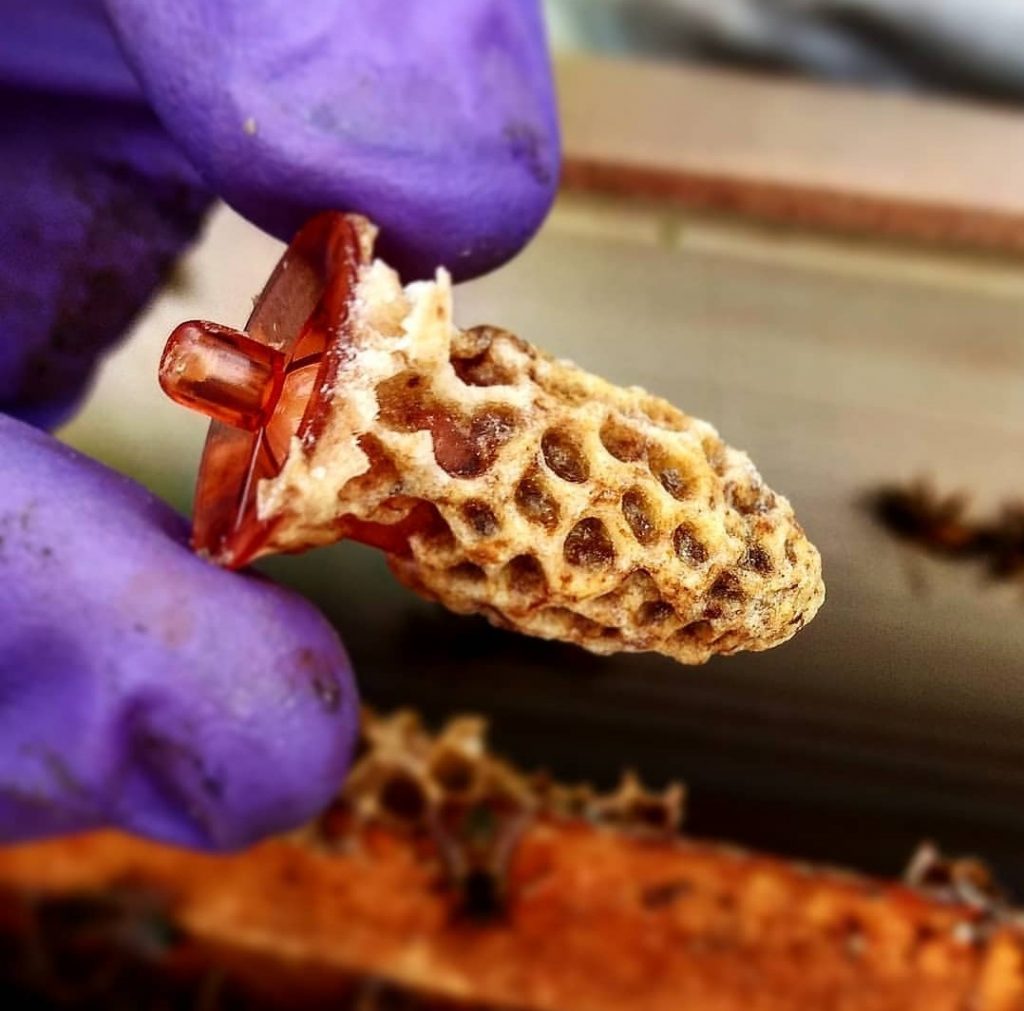
- Producing queen cells. If we are unable to keep up with demand for mated queens we will produce queen cells (time permitting). This will allow us to provide more queens to Alberta in a shorter period of time. However, there are risks associated with purchasing queen cells and it is important that beekeepers are aware of how to care for and install cells. Information will be sent out to customers via our mailing list and social media posts.
We will not, under any circumstances, increase the price of our queens in 2020. However, shipping prices may be updated to reflect price changes at local courier carriers.
Please note that we typically ship our queens via Canada post but we will be monitoring COVID-related service changes at major postal companies and will change our service provider accordingly. Customers will be contacted regarding any changes.
Free Educational Sessions
Beekeeping in 2020 will require creativity and patience.
Many new beekeepers will struggle to adequately care for their hives, especially if they had previously relied on club meetings for education.
To bridge the knowledge gap, we will be hosting educational Zoom meetings throughout the season. These sessions are free but spots are limited. Both group and private meetings are available.
Please sign up for our mailing list or keep an eye on our education page to find out what sessions are available.
Alberta Beekeepers Online Chat Group
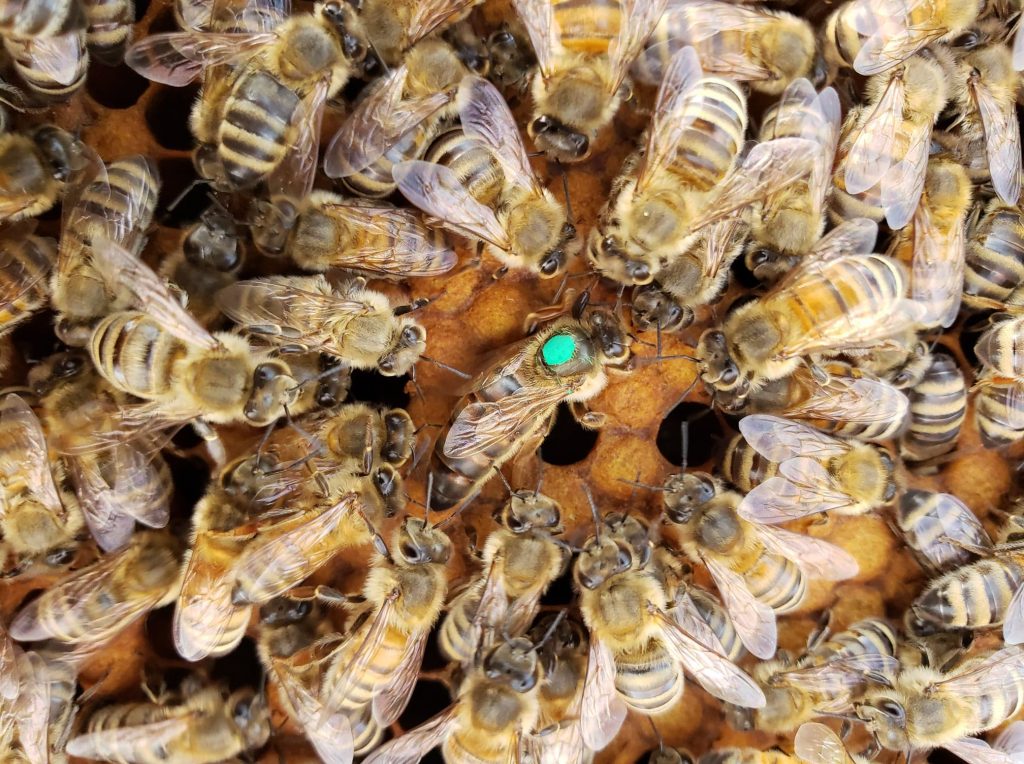
We have created an online chat group to connect local beekeepers during this time. Members can post classifieds ads, news, tips, and more. It’s free to sign up and anyone is welcome to join. To sign up please email us with a request to join and indicate which email address you would like to use to sign up. Alternatively, click here to access the sign-up page.
Merchandise
Merchandise availability will not change. Please be patient as shipping delays are expected.
Items that are normally printed in North America may be printed elsewhere to expedite fulfilment, so customs charges may now apply to items shipped to the USA and Canada.

Honey
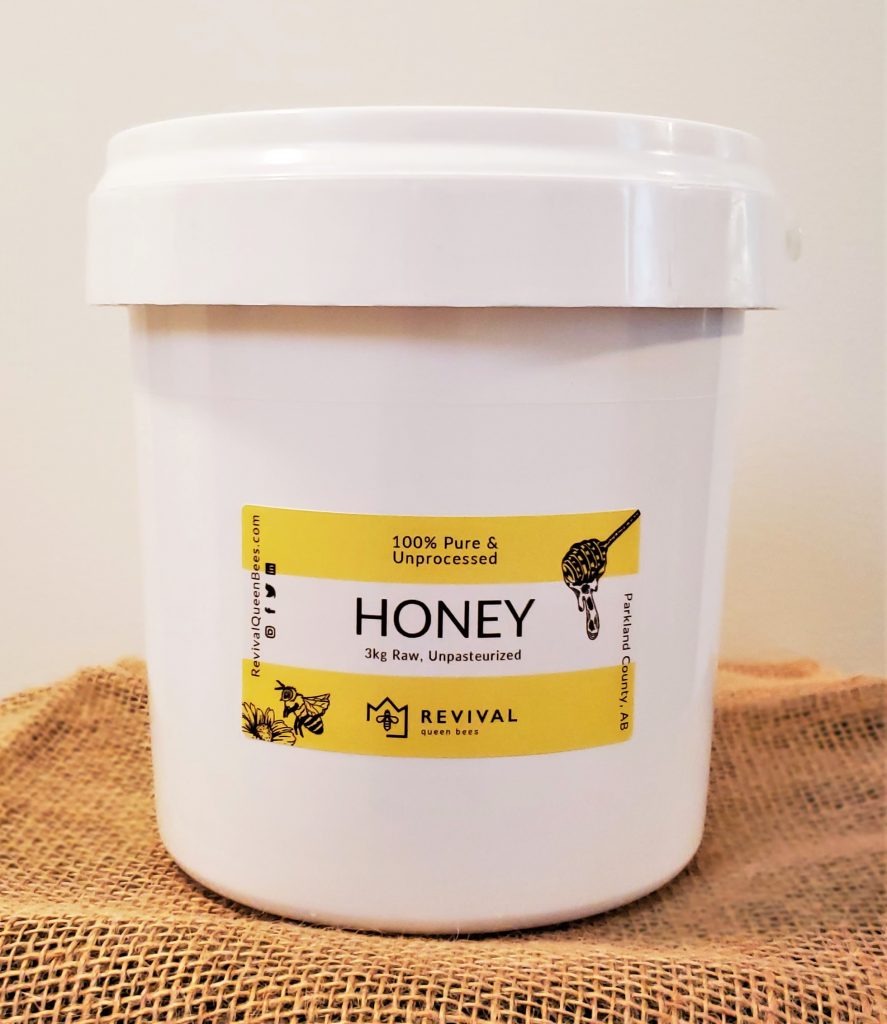
We are periodically offering free contactless delivery within Edmonton.
Honey from our 2019 harvest will not increase in price, and there will be no minimum order requirements to qualify for the free delivery option.
Deliveries will be via porch/doorstep drop-off and customers will receive a text message or email 10 minutes prior to the delivery.
Please sign up for our mailing list to get updates on our delivery service.
We thank you for continued support and patience during these trying times.
It has been amazing to watch the community pull together to help each other. If you have suggestions for additional services or support we can offer please feel free to contact us.
Buying a new queen and having her rejected by her new colony is heart breaking. By following the advice in this article you can increase the likelihood that the queen will be accepted.
Before introducing your new queen it is important to ensure that the old queen has been removed from the hive for at least 48 hours in small colonies or 72 hours in large colonies. Remove any queen cells that are present.
If you purchased your queen from Revival she will be in a JZ BZ queen cage with 4 bee attendants. The cage has a long tube that is filled with candy. The candy provides food to the bees during shipment but it also acts as a time-release barrier that the outside bees must chew through to gain access to the queen. This time release is crucial because it allows the bees in the new colony to adjust to the pheromones of the new queen.

Place the cage in the middle of the brood nest, preferably between 2 frames of emerging brood. If there is no brood in your hive place the cage in the middle of the bee cluster. Position the cage between two frames, with the candy end pointing straight up. Squish the cage firmly into wax. Do not worry about damaging the comb because the bees will quickly repair it once you remove the cage.
Over the next few days the bees will likely chew their way through the candy and the queen will be released into the hive. Occasionally, the candy is too tough to chew through so you can check on your queen after 5 days to ensure she has been released.
If the queen has not been released you can release her, but only if your bees are not clinging tightly to the outside of the cage. This clinging behavior indicates that the bees have not fully accepted her yet and you will need to wait a few more days before opening the cage.
Note that it can take several days for the queen to become established and start laying eggs. The colony should be disturbed as little as possible for two weeks after the cage placement. The absence of eggs during this time does not necessarily indicate your colony is queenless.
It is best to place your cage into the hive as soon as possible. However, due to inclement weather or travel you may not be able to do so. If you are unable to introduce your queen immediately after purchasing her you should keep the cage at room temperature, in a dark area. Do not allow the cage to be exposed to breezes or sunlight, but ensure they have access to oxygen (i.e., they are not sealed tightly in a bag).
To feed the bees, place one drop of water and one drop of honey from your hive onto the cage, away from the candy end. Repeat each morning and night until the cage is ready to be moved to the hive. The caged queen can survive for several days outside the hive.
Please take the time to follow these instructions carefully. Although these recommendations do not 100% guarantee your queen will be accepted, they mitigate against many of the issues that result in queen rejection.
Ready to order your queen? Head over to our Shop.
Local queens for local populations
Healthy and productive honey bee colonies depend on strong, healthy queens. The strongest queens are the ones that thrive in the local environment regardless of the season.
Breeding stock from other regions has not been exposed to the same pressures that bees in your local area have experienced. In contrast, local queens are produced from breeding stock that is performing well in your area. These colonies have endured and overcome the stresses that are unique to your climate and environment.
Imported queens also risk developing colonies that are at a genetic disadvantage. They can carry foreign diseases and pests that the local honey bee population is not adapted to.
Some beekeepers are unable to produce locally adapted queens due to time, resource, and skill constraints. However, these beekeepers can still make a positive contribution to regional honey bee health by sourcing queens from other local beekeepers. These local queen stocks help to increase local drone populations, which are a crucial factor in any breeding program that relies on open mating.
Local Queens for Alberta
In Alberta, we need colonies that have been tested by our harsh norther climate – we need bees that have survived our winters. By importing queens from warmer climates we cannot select for bees that winter well and take full advantage of our intense summer season. Yet, we continue to import queens due to seasonal breeding challenges and a lack of local supply. This mass importation has created a perilous dependence on a source of bees that is subject to border closures and changes in foreign policy.
For Alberta to overcome this dependence there needs to be a culture change that centers on reducing the mass importation of honey bees. By defining new hive management practices and increasing the number of queen breeders in Alberta we can at least start to increase the use of local queens. This increased supply of domestic queens will not only strengthen beekeeping in Alberta overall, but it will allow the province to move towards greater agricultural sustainability.
At Revival Queen Bees we are excited to educate local beekeepers on how they can incorporate more local queens into their colonies. Keep an eye on our blog or follow us on Instagram, Twitter, and LinkedIn to be part of the journey.
Ready to order your queen? Head over to our Shop.
Revival Queen Bees are selectively bred for traits that matter to Canadians. These traits can help your bee population thrive against local challenges, such as long winters and local pests.
Our breeding stock was originally obtained from a queen breeding operation in British Columbia. For more than 30 years the queens in this breeding program were selected for gentleness, honey production, and overwintering capability. Over the last 4 seasons in Alberta we have further selected for overwintering capability and fast spring buildup. Additionally, we have a very low tolerance for aggressive genetics at our apiary.
The health and viability of our queens are verified through laboratory testing.

Ready to browse our queen shop? Click here.
You’ve completed a hive inspection and found multiple eggs in some cells. You know this is a sign of laying workers and you’re wondering what you should do now.
First, let’s find out if you have laying workers or an over-zealous queen.
Typically, only queens lay eggs.
In a normal colony, the ovaries of the worker bees are inhibited by pheromones released by the queen and her brood; this ensures that only the queen can lay eggs. If the queen dies and is not quickly replaced, the pheromone wears off and the worker’s ovaries begin to develop. This eventually allows the workers to take over the egg laying duties of the queen, and can spell disaster for the hive.
Why do we care if workers lay eggs?
A hive with laying worker bees will ultimately perish. Workers can only lay unfertilized eggs, which develop into drones. A hive with too many drones is ultimately doomed because drones do not forage for nectar or pollen. It is then only a matter of time before the food stores are depleted.
How do we know when we have laying workers?
Multiple eggs per cell is the first clue. If the eggs are on the side of cells or on the cell walls then you likely have laying workers. This is due to the short abdomens of worker bees, which prevent them from being able to reach the bottom of the cells. You may also see eggs in cells that contain pollen.

Queen bees have long abdomens that allow them to lay eggs on the bottom of the cells in the hive. If the eggs are on the bottom of the cell it is more likely that they were laid by a queen.
Young queens need a bit of practice laying eggs, so if you recently introduced a queen and there are some cells with multiple eggs on the bottom you shouldn’t panic. The queen will soon correct this laying pattern. Keep an eye on the hive if you are unsure.
How can we fix the laying worker problem?
You’ve determined that you have laying workers. What now?
You will find a few different solutions on Google, but we recommend the “shake-out” method. Hives with laying workers are unlikely to accept a new queen, so we need to “shake-out” the laying workers to remove them from the hive.
Move the laying worker hive at least 30 meters from its original location and put a new (occupied) hive in its place. You can then shake all of the bees from the laying worker hive off of the frames and onto the ground. In theory, the laying workers have never left the hive and will be unable to find their way home once they are on the ground. The bees that are capable of returning home will fly to the original location of their hive and join the new hive that is waiting for them.

A bittersweet ending
The good news is that, using this method, you will not need to purchase a new queen because you will effectively be combining two hives.
The disadvantage is that it is not just laying workers that are lost in the shake out – other important bees, such as the workers that care for the brood, are also unable to find their way home.
Several bees are lost in the process of trying to save the hive, so finding laying workers is always a huge disappointment. The best way to avoid this situation is to check on your hives regularly to ensure that they have a queen. If the hive is queenless, the beekeeper should introduce a new queen immediately.